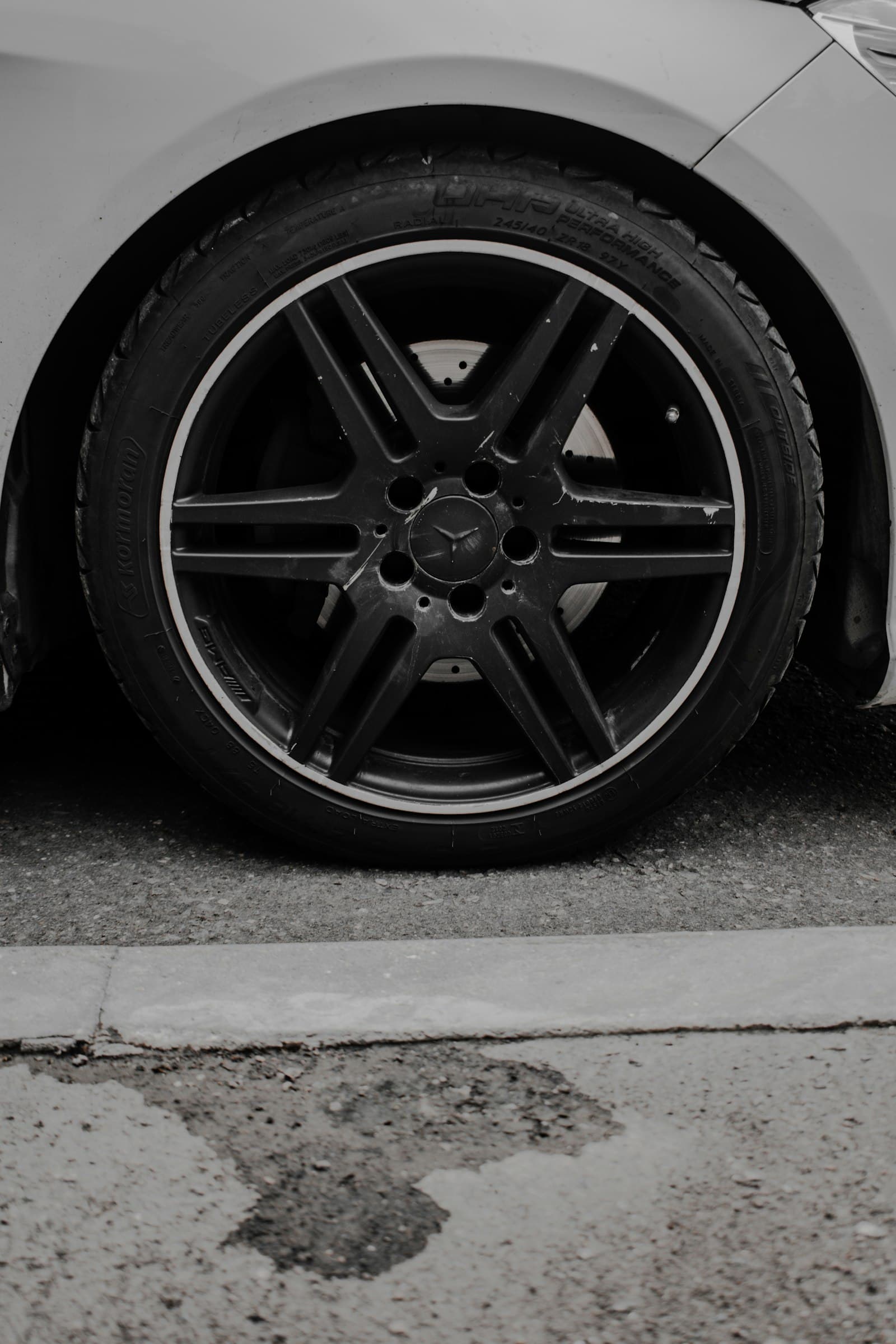






Every tyre has a code like 205/55 R16 91V on its side. That code tells you everything you need to buy the right tyre.
205: the width
The tyre's width in millimetres, measured from sidewall to sidewall.
55: the profile
The sidewall height as a percentage of the width. Here the sidewall is 55% of 205 mm, about 113 mm. The lower this number, the lower and sportier the tyre.
R: the construction
R stands for radial, the build of almost every modern car tyre. Sometimes it says ZR: suitable for speeds above 240 km/h.
16: the rim size
The rim diameter in inches. This tyre fits a 16-inch rim.
91: the load index
The maximum weight one tyre may carry. 91 means 615 kg per tyre. Your new tyres need at least the load index on your certificate of conformity.
V: the speed rating
The tyre's maximum speed. V means 240 km/h. Other common letters are T (190 km/h), H (210 km/h), W (270 km/h) and Y (300 km/h).
Other markings
- M+S: suitable for mud and snow, but says little about winter performance.
- 3PMSF: the mountain-and-snowflake symbol, for true winter and all-season tyres.
- XL: reinforced tyre with a higher load index.
- DOT: the last four digits give the week and year of production.
Want to see which other tyre sizes you can fit? Use our tyre size calculator.